Produce water.
Eliminate transport.
The full read on Joule Cycle — what it is, why it exists, and what changes when a region stops moving water and starts making it.
Or watch the 90-second version →
Four percent of the grid
moves water.
Moving water consumes approximately four percent of US electricity. Pumping, treating, conveying mass from where it was extracted to where it is used.
A liter delivered to a city in Arizona required hundreds of joules of work that the water did not need. Pure transport waste. The global water transport industry is worth seven hundred billion dollars. It is an industry that shouldn't have to exist at its current scale.
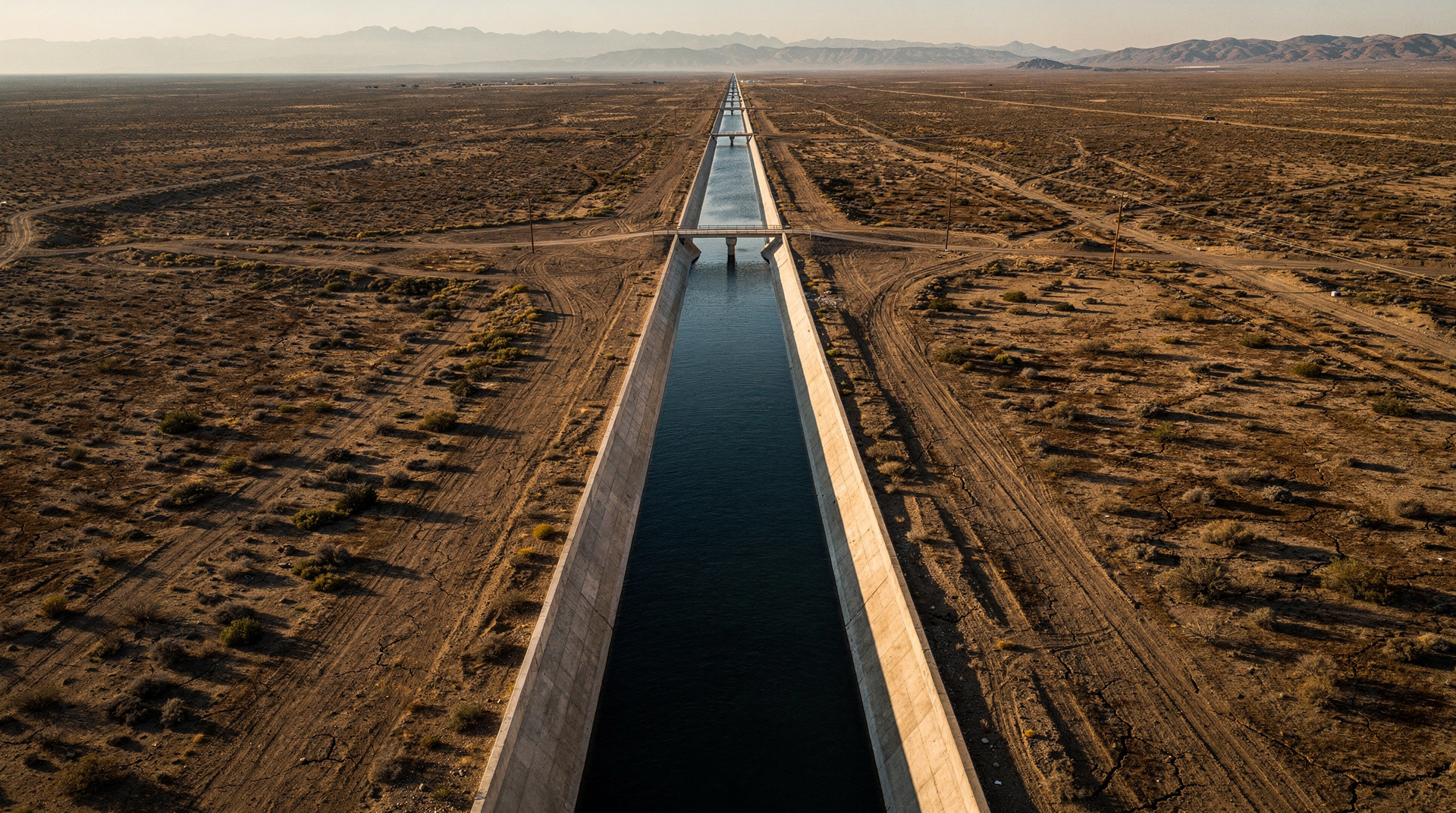
Produce where used.
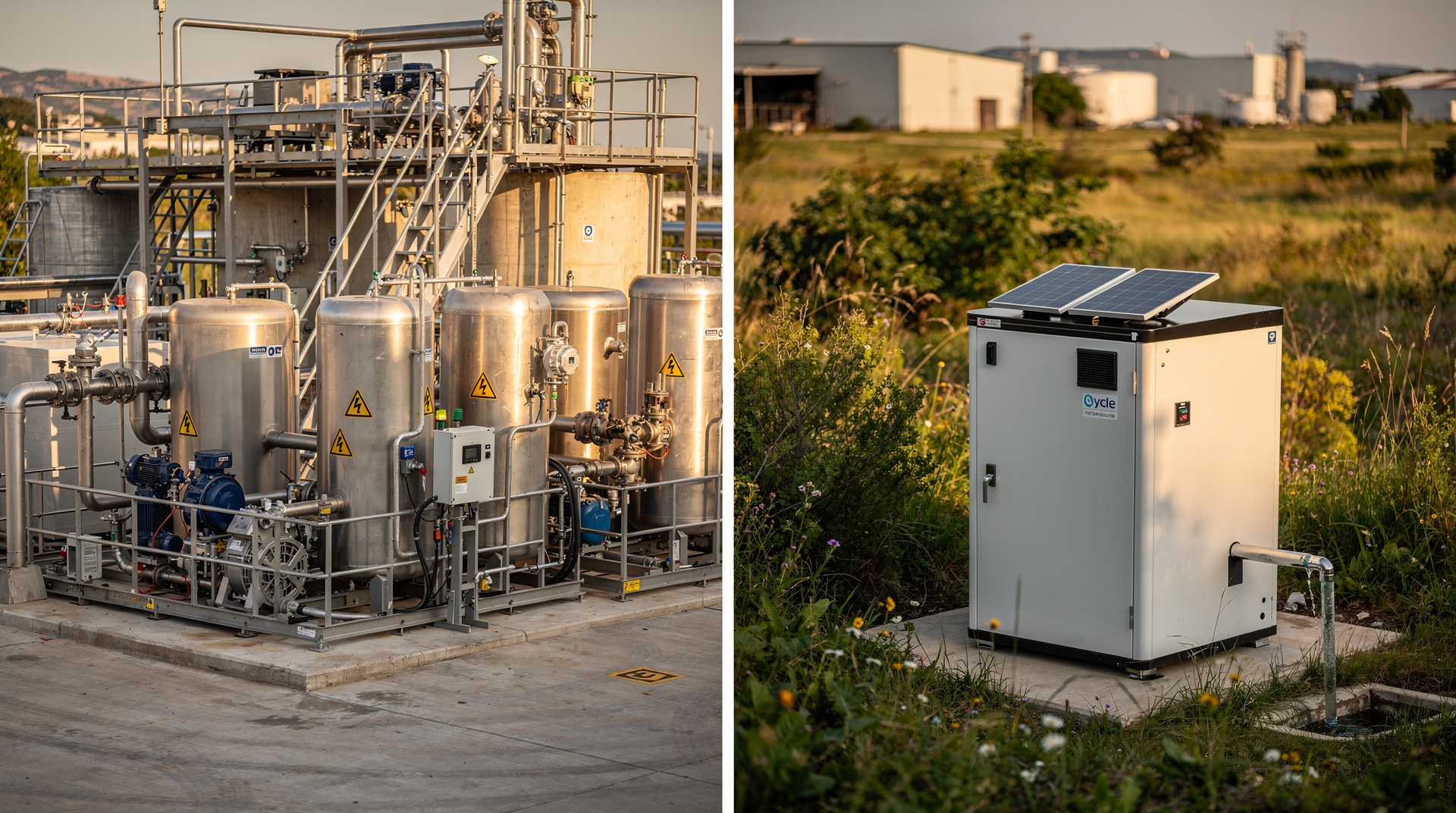
The technology to produce potable water from seawater, atmosphere, rain, greywater, groundwater, or rivers has existed for decades. Reverse osmosis. Atmospheric condensation. Capacitive deionization. UV. Mature.
What has not existed is an integrated platform that produces water at the point of demand, powered by the energy available at that point, managed as infrastructure rather than a sequence of failed startups.
Same silicon.
Different chemistry.
Joule SOM. Buna OS firmware. Mesh protocols. BLAKE3 provenance. Same stack as Corridor and Horizon.
Water production is a compute problem with a chemistry tail. Control the membranes, monitor the feedwater, adjust the recovery rate, sign the output. The silicon is identical. The chemistry is what differs per source.
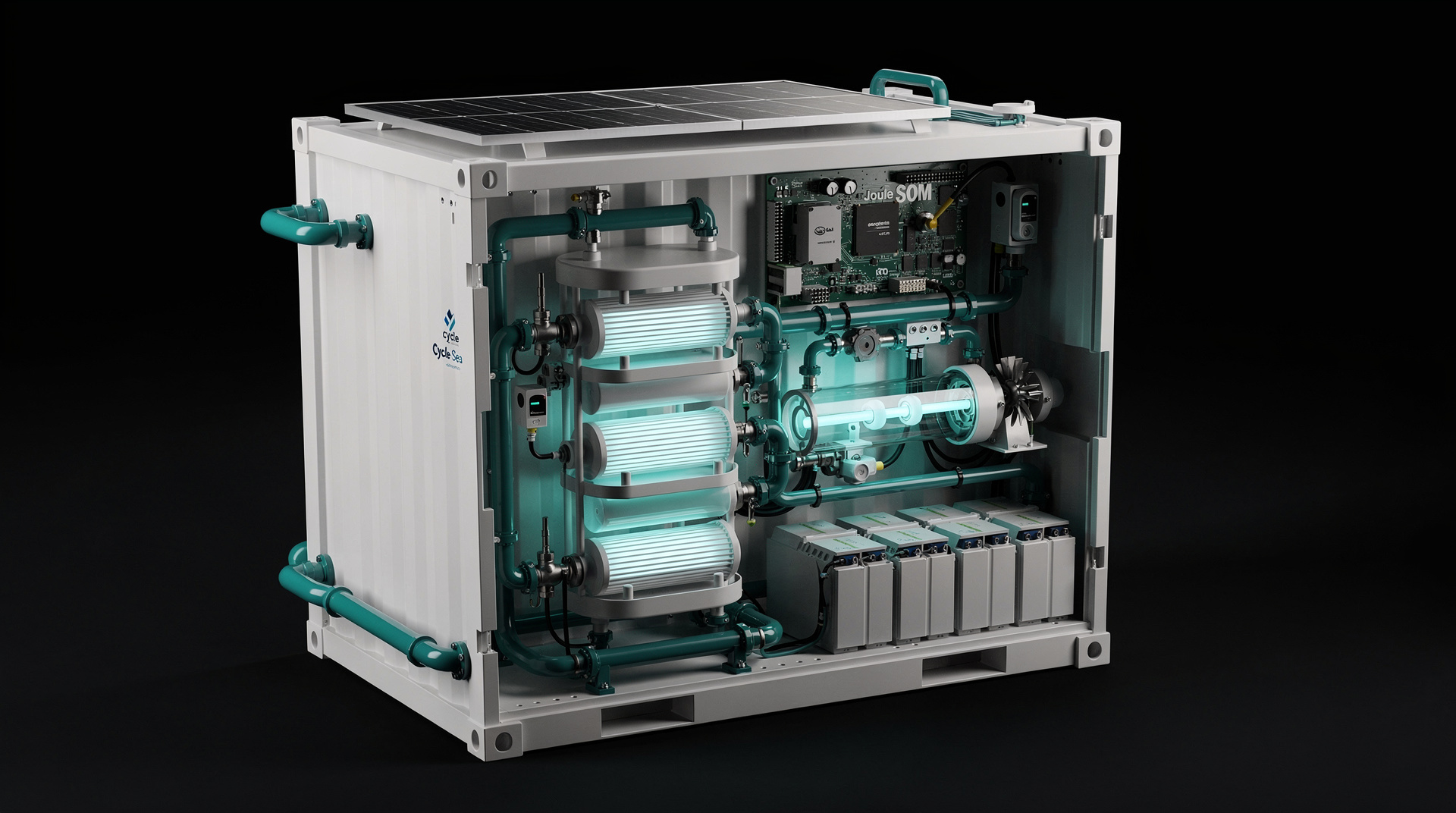
Whichever is locally abundant.
- Sea — seawater desalination, deploys at Horizon Pier, offshore Buoy, islands
- Air — atmospheric water generation, mounts on Corridor Pole / Mast
- Rain — rainwater harvest, Corridor Structure and agricultural buildings
- Loop — greywater and process recycling, Buna workcells and indoor ag
- Well — groundwater purification with monitoring, rural wells and disaster
- Brine — desalination byproduct extracted as lithium, magnesium, salt
- Flow — river and stream purification with small hydro, Horizon Lock nodes
Brine is not waste.
Brine is minerals.
Greywater is not sewage. Greywater is usable water. Every output has a market. Cycle Brine extracts lithium, magnesium, potassium, and industrial salt from what other desalination systems dump back into the ocean.
The waste stream funds the operation. The environmental impact of brine discharge drops to near zero.

Production in
the same fleet.
Cycle production nodes observed and managed with Corridor sensing nodes and Horizon maritime nodes in one operational picture. One console. One firmware release cycle. One provenance chain.
A tribal nation that runs Corridor on its reservation roads adds Cycle for its village water without onboarding a second vendor.

Water as a Service.
Signed at the source.
Three arrangement layers, each independently priced. Capex for the hardware. Deployment as a service. Liters produced as a subscription. Every liter cryptographically signed at production.